Course description

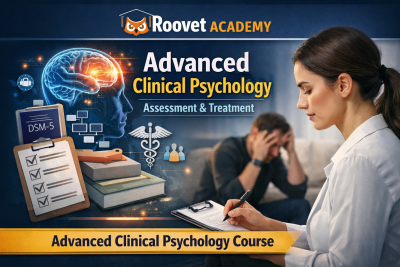
This course is designed for advanced learners who want to think and work like a clinician—systematically, ethically, and scientifically.

You’ll deepen your skills in:

  • Clinical assessment and diagnostic reasoning (integrating interviews, observation, and standardized measures)

  • Case formulation (linking symptoms to mechanisms, context, development, and maintaining factors)

  • Evidence-based treatment planning (matching interventions to presentations and client needs)

  • Risk assessment and clinical decision-making (including crisis, safety planning, and duty-to-protect basics)

  • Ethics, culture, and real-world practice (bias-aware care, documentation, boundaries, and professional judgment)

The course emphasizes a “clinical science” approach: hypotheses, testing, revision, and measurable outcomes—so your work stays grounded in reality, not vibes.

What will i learn?

  • Conduct structured clinical intake thinking: identify presenting problems, relevant history, and clinical priorities.
  • Apply diagnostic reasoning: differentiate common disorders using symptom patterns, duration, severity, impairment, and context.
  • Select and interpret assessments: choose appropriate screening tools and explain results in plain language.
  • Build strong case formulations: create a coherent model of causes/maintaining factors and testable hypotheses.
  • Design evidence-based treatment plans: set measurable goals, choose interventions, and sequence care logically.
  • Assess risk and respond safely: identify red flags, apply safety planning basics, and document appropriately.
  • Integrate culture and ethics into care: reduce bias, improve cultural humility, and maintain professional boundaries.
  • Track outcomes and adapt treatment: use progress measures to decide when to continue, change, or step up care.

Requirements

  • Solid understanding of Intro Psychology fundamentals (learning, cognition, development, personality basics)
  • Basic familiarity with abnormal psychology/psychopathology (e.g., anxiety, depression, trauma)
  • Ability to read and interpret clinical writing (case notes, treatment plans, assessment summaries)
  • Comfort with critical thinking and evidence-based reasoning
  • Recommended (not required): prior exposure to CBT concepts, research methods, and ethics principles

Frequently asked question

Not really. This course assumes you already understand foundational psychology (basic psychopathology, research basics, and core therapy concepts). If you’re brand new, take an intro or intermediate course first.

Advanced learners preparing for clinical work: counseling/psychology students, interns, early-career clinicians, and serious self-studiers who already know the basics.

It teaches diagnostic reasoning and assessment skills, but it’s educational—not a license. Use these tools ethically and within your scope, and follow local laws and supervision requirements.

You’ll learn how to choose and apply evidence-based approaches like CBT-informed work, behavioral interventions, motivational interviewing basics, trauma-informed care principles, and structured case formulation models.

Yes—case-based learning is central. Scenarios are anonymized and educational.

Yes—knowledge checks, case formulation exercises, and treatment-planning prompts.

Learners will receive one upon completion of required lessons + assessments.

Tony Nelson

Tony James Nelson II(born April 13, 1987) is a multifaceted American entrepreneur, website developer, investor, writer, clothing designer, and hip-hop artist, known by his stage name Tribal Young Brown. He is the visionary behind the anime series, books, and comics under the "Tribal" brand and serves as the co-founder of Tribal Comics Nelson is most notably recognized as the founder of Roovet International Corporation, Empire Corporations, and Southeast Industries Corporation. 

$125

Lectures

8

Quizzes

1

Skill level

Advanced

Expiry period

Lifetime

Certificate

Yes

Share this course

Related courses